Capture – Who gets to be blamed by the British media, and who gets to walk.
Two stories landed in the British press this week. The first arrived as a Labour Party dossier naming twenty-five Green Party candidates accused of antisemitism, conspiracy theories, and support for Hamas and Russia. Two of them were arrested on suspicion of incitement to racial hatred. The dossier was released roughly twenty-four hours before polls opened in the local elections of 7 May 2026. The timing was not subtle.
The second story has been bubbling for about ten days. Nigel Farage, leader of Reform UK, received five million pounds personally from Christopher Harborne, a Thailand-based crypto billionaire whose previous donations to Reform total around twelve million. The five million was not a party donation. It went directly to Farage. He says it was for personal security. He did not declare it on the MPs’ register of interests. The Conservatives reported him to the Parliamentary Standards Commissioner. Labour also accused him of breaking House of Commons rules. Sixty-eight per cent of the British public say they are concerned the gift will give Harborne inappropriate influence over Farage. Forty-nine per cent of current Reform voters say the same.
These two stories have similar bones. Allegations of serious misconduct. A leader who needs to answer for what someone in their political orbit did, or in Farage’s case did to him. A public interest argument loud enough that no editor could pretend otherwise. They have been treated nothing alike.
This piece is about why.
The arithmetic the press does not show you
Twenty-five Green candidates out of more than four thousand five hundred is 0.55 per cent. Some of those twenty-five are genuinely vile. One of them ran a Threads account using the handle “thereal.anne.frank”, with a profile image of Anne Frank wearing a keffiyeh, calling Zionists “vermin” and “rats”, and posting an image of an industrial shredder labelled “Zionist juicer”. This is grotesque, and the police response was correct. Two arrests for incitement to racial hatred is the right legal answer.
Now hold that next to Reform’s running record since 2024.
Mick Greenhough, candidate in Orpington, wrote that “the only solution” was to “remove the Muslims from our territory”, and that “Ashkenazi Jews are the problem” who “have caused the world massive misery”. Edward Oakenfull, dropped in Derbyshire Dales, posted about the IQ of sub-Saharan Africans. Robert Lomas, Barnsley North, said black people should “get off [their] lazy arses” and stop acting “like savages”. Leslie Lilley, Southend East, called migrants arriving on small boats “scum” and added “I hope your family get robbed, beaten or attacked”. Stuart Prior, Essex, declared white people “the master race”. Steve Hartley, Oxfordshire, defended Jimmy Savile as a “working class hero” alongside Vladimir Putin. Miriam Thomas, Buckinghamshire, called Islam a “false religion”.
One in ten of Reform’s councillors elected in May 2025 had quit by April 2026, many of them through scandal or defection. The party then appointed, as head of candidate vetting, a man previously suspended from Reform itself for praising Hitler and Assad.
Farage told GB News in April 2025 that Reform was vetting candidates “to a standard that no other party has ever done before for local council elections”. The man running the vetting had been suspended for praising Hitler. Both of these things are true at the same time.
The British press does not report this as asymmetry. Each individual scandal arrives, gets two days of coverage, and recedes. The cumulative picture, the one that any competent prosecutor would call a pattern, never appears in a single headline. The Greens get the dossier. Reform gets the rolling reset.
The mechanism
The British press has a structural problem and the structural problem has a name. Capture.
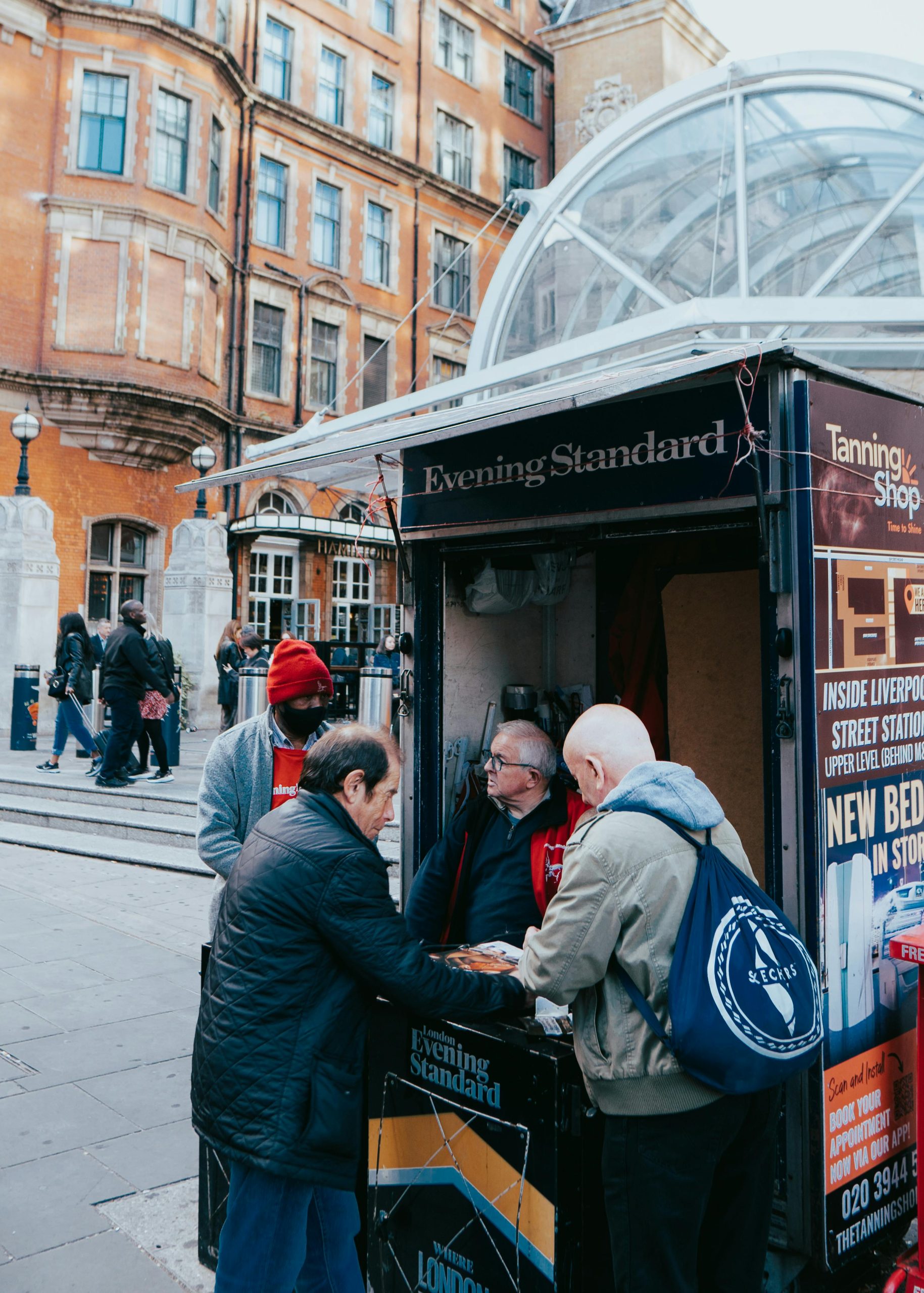
Four families and one corporate group control most of what is read at scale. Murdoch holds The Times, The Sunday Times, and The Sun. Rothermere holds the Daily Mail, the Mail on Sunday, and the Metro. The Barclay family held the Telegraph until the recent sale process. Lebedev holds the Evening Standard and a stake in the Independent. Reach plc owns the Mirror, the Express, and the regional chains beneath them. The owners are not bystanders to the political class. They are part of it. They dine with it, lobby it, and in several documented cases have shaped policy through it.
The press regulator is called IPSO, the Independent Press Standards Organisation. It is funded by the publishers it regulates. The Leveson Inquiry recommended genuine independent regulation in 2012. The recommendation was not implemented. The press regulated itself, gave the regulator a name with the word “Independent” inside it, and moved on. This is the same template you find when a workplace publishes an internal grievance procedure that reports to the manager who caused the grievance. The form of accountability without the function.
Investigative capacity has been hollowed out. Around thirteen thousand journalists worked in regional UK journalism in 2005. The figure today is below six thousand. The kind of long-running, document-trail reporting that would catch the Farage donation in real time, or assemble the Reform pattern across two years into a single coherent indictment, does not exist as a working system any more. What exists is desk journalists rewriting press releases. The Labour dossier on the Greens lands pre-packaged for a system that has lost the capacity to do its own work. So the dossier becomes the story.
The BBC operates under a different kind of capture. Its charter is renewed every ten years. Its licence fee is set by the government. Board appointments are political. Every Conservative government since 2010 has threatened the BBC financially. The result is timid coverage, an obsessive symmetry between sides even when one side is demonstrably misrepresenting the facts. The BBC reported the Farage five million. It reported it as a question. “Should Farage have declared this?” rather than “Farage failed to declare this”. The framing is doing the political work that the editorial guidelines forbid the journalist from doing openly.
The Forde test
There is one piece of evidence that breaks this whole thing open, and almost nobody in the political press is using it.
The Forde Report, commissioned by the Labour Party itself and published in 2022, concluded that within Labour antisemitism was being used as a “factional weapon”. This is not an external accusation. It is Labour’s own internal review of its own conduct.
Read that sentence again. Labour’s own report says the party uses antisemitism allegations as a factional weapon.
Now look at the Greens dossier, released by Labour twenty-four hours before a local election that polls suggest will see Reform and the Greens between them eat a hole in Labour’s vote share. The Forde Report is being acted out in real time. The mechanism it described, weaponised allegation as electoral tool, is precisely the mechanism that produced the Monday night dossier drop.
This is the part that matters, and it is the part that has to be said carefully. The substantive antisemitism among some Green candidates is real and serious. Two arrests for incitement to racial hatred is the right legal response. None of that is in question. What is in question is whether a party with a documented internal record of using antisemitism as a factional weapon, including suspensions of its own MPs in the last two years (Graham Jones, Andy McDonald, Azhar Ali, Kate Osamor), is acting in good faith when it releases a dossier on the eve of an election. The answer is in their own report.
No journalist is making this connection in print. Every journalist with a politics desk in the country knows the Forde Report exists.
The pattern repeats
Readers of this blog will recognise the shape of this argument.
The Office Trap series argued that return-to-office mandates function as an instrument of control because the institutional layer between worker and decision is captured. The worker sees that the productive justification is missing. The retention data is on the worker’s side. The productivity data is on the worker’s side. The mandate happens anyway. The mechanism that should translate “the people see this clearly” into “the system responds” is broken.
The same mechanism is broken here. Sixty-eight per cent of the British public can see the Farage donation is a problem. Forty-nine per cent of his own voters can see it is a problem. The mechanism that should translate that perception into political consequence is broken in the same way and for the same reason. The institutional layer between citizen and outcome has been captured by the actors it was supposed to constrain.
This is the through-line. Capture is the recurring failure of the British system in 2026, and it is failing across domains that look unrelated until you ask the same question of each. Who owns the mechanism that is supposed to hold this actor accountable, and what is their relationship to the actor in question? In the workplace, HR reports to the executive that imposed the mandate. In the press, the regulator is funded by the regulated. In political accountability, the parties take turns weaponising the issues they are themselves guilty of, and the press lacks the capacity or the willingness to make the cumulative case. Different domains, same architecture.
Who gets to be embarrassed
The final question this raises is the most useful one.
In any political system, electoral punishment is the ultimate currency. But that punishment is distributed. Someone decides what is embarrassing, when it is embarrassing, and for how long. That power has a location. It sits with editors, proprietors, party communications operations, and the small group of broadcasters whose output sets the daily news weather.
The Greens are receiving their embarrassment on the eve of the vote. The Reform candidates who called for the removal of Muslims from Britain received theirs in two-day cycles spread across eighteen months, where each individual case looked exceptional and the pattern stayed invisible. Farage received his five-million-pound revelation in a friendly Telegraph interview, where he was allowed to frame it as a security expense by a journalist who did not push back. The lifecycle of a scandal is a policy choice. Someone is making it.
When you ask who, the answer is the same answer you get when you ask why the productive justification for the office mandate is missing but the mandate happens anyway. The people who own the mechanism are the people who benefit from the mechanism behaving exactly the way it does.
That is what capture means. The steady, almost boring alignment of interests between the body that is supposed to constrain power and the power it is supposed to constrain. Not corruption in the dramatic sense. Something duller and more complete.
It produces the world we are living in, where the public sees clearly and the system shrugs.
The next election will not fix it. The next charter renewal will not fix it. The next Leveson-style inquiry will not fix it, because the last one did not. What might fix it, eventually, is a critical mass of citizens recognising that the failure they are living through at work, the one this blog has been documenting for a year, is the same failure they are watching in the press, the regulator, and the parties they vote for. The mechanism is the same. The names are different. The capture is general.
And on Thursday, the public will be asked to vote inside it.
Sources:
Greens dossier and arrests
- “Zack Polanski’s Greens face anti-Semitism accusations on eve of UK elections”, The National (6 May 2026)
- “Labour to release ‘dossier of disturbing views’ from Green local elections candidates”, LBC (May 2026)
- “UK Labour Party releases video ft. antisemitic Green Party candidates”, The Jerusalem Post (5 May 2026)
Farage £5 million donation and public polling
- “Exclusive: Half of Reform voters concerned by Nigel Farage £5m gift”, New Statesman (6 May 2026). Survation poll commissioned by 38 Degrees. Source for 68 per cent and 49 per cent figures.
- “Nigel Farage claims he had ‘no obligation’ to declare £5 million gift from crypto billionaire as it ‘wasn’t political'”, Left Foot Forward (May 2026)
- “Nigel Farage faces standards probe over $6.7 million gift from Tether billionaire Christopher Harborne”, CoinDesk (29 April 2026)
- “Farage Accused of Breaking Rules Over £5 Million Donation”, Bloomberg (29 April 2026)
Reform UK candidate record (2024 to 2026)
- “Meet some Reform UK local council candidates” (2025 list), Mark Pack
- “Meet some Reform UK local council candidates” (2026 list), Mark Pack
- “Voters should be wary of promises made by Nigel Farage’s Reform UK”, openDemocracy (May 2026). Source for one in ten Reform councillors departing and the Kent leak.
- “Reform UK drops three candidates over racism row”, Asian Lite (1 July 2024). Oakenfull, Lomas, Lilley.
- “Reform suspends Savile defender and Islamophobic candidate after Farage boasted about vetting”, Left Foot Forward (April 2025). Hartley, Thomas, plus Reform’s appointment of a previously suspended candidate as head of vetting.
- “Reform UK drops candidate accused of antisemitism”, The Jewish Chronicle. Greenhough.
- “Reform UK axes two candidates over racist remarks”, The New Arab. Kay and Greenhough.
Forde Report and Labour antisemitism record
- Forde Inquiry Report (2022), full text. Primary source. Contains the “factional weapon” finding.
- “Antisemitism in the British Labour Party”, Wikipedia. Useful overview of suspensions including Graham Jones, Andy McDonald, Azhar Ali, Kate Osamor.
- “Why has UK’s Labour Party suspended two election candidates over Gaza war?”, Al Jazeera (16 February 2024). Azhar Ali context.
- “Labour suspends candidate who ‘downplayed’ antisemitism in the party under Corbyn”, The Jewish Chronicle (June 2024). Andy Brown.
UK press structure and capture
Survation polling profile, Survation. Methodology context for the polling cited above.
“Colossal decline of UK regional media since 2007 revealed”, Press Gazette (February 2024). Source for the regional journalist headcount figures.
About IPSO, Independent Press Standards Organisation. Primary source on funding model and governance.
Leveson Inquiry archive, UK Government Web Archive. Primary source for the 2012 recommendations.